Meeting Registration
The Polyurethane Foam Association (PFA) will hold its 2023 Fall meeting at the Omin King Edward Hotel. Brimming with old-world charm and a rich heritage dating to 1903, The Omni King Edward Hotel has been re-imagined for the 21st century. The first luxury hotel in Toronto, Omni exudes character and authenticity and is set in a prime downtown location in the financial district, with plenty of nearby dining and attractions, as well as its own restaurants and bars.
Click Below To Make Hotel Reservations At The Omni King Edward
(Note: Room Rates Are In Canadian Dollars)
PFA Member
Live Meeting Registration, Omni King Edward, TorontoPFA Member
Virtual Meeting Portal RegistrationNon-Member
Live Meeting Registration, Omni King Edward, TorontoNon-Member
Virtual Meeting Portal RegistrationDon't Miss: Social Events

Please RSVP For Each Below
DISTILLERY TOUR
Tuesday, October 31, 1:00-3:30pm
A Complimentary Tour of Reid Distillery and its signature gins. Includes drinks and a personal charcuterie board for each guest.
Sponsored by Monument Chemical
TOUR FULL


Welcome Cocktail Reception
Tuesday, October 31, 6-7 pm
Join us for a frightenly good opportunity to meet and mingle. Sponsored by CertiPUR-US®
Wednesday, November 1 Schedule
2023 Fall Meeting Sessions
CertiPUR-US® Report
Wednesday, November 1
10am
An update on CertiPUR-US® activities, including testing, directories, marketing, and more.

Mike Crowell
Executive Director
CertiPUR-US
Speaker Biography
Mike Crowell is Executive Director of the CertiPUR-US® program. He has more than 40 years of senior management experience in the polyurethane foam industry, including technical, manufacturing, sales and marketing positions. The CertiPUR-US program was developed to provide the comfort and confidence of knowing the flexible polyurethane foam in bedding and upholstered furniture meets program standards for content, emissions and durability and are analyzed by independent, accredited laboratories. Today, foam producers from all countries may participate in the program, as long as they meet our rigorous certification guidelines

Helen Sullivan
Communications Counsel
CertiPUR-US
Speaker Biography
Helen Sullivan, APR, Fellow PRSA, has served as Communications Counsel for the CertiPUR-US® foam certification program since the program was first established in 2008. Her expertise is in the development and implementation of industry-wide marketing programs for trade associations. During her career she has launched award-winning marketing campaigns for numerous groups including apple growers, pasta manufacturers, the bedding industry, sleep technologists and parking professionals.
Industry Issues Session
Wednesday, November 1
2-5pm
(Additional Presenters To Be Added)
Isocyanates Update
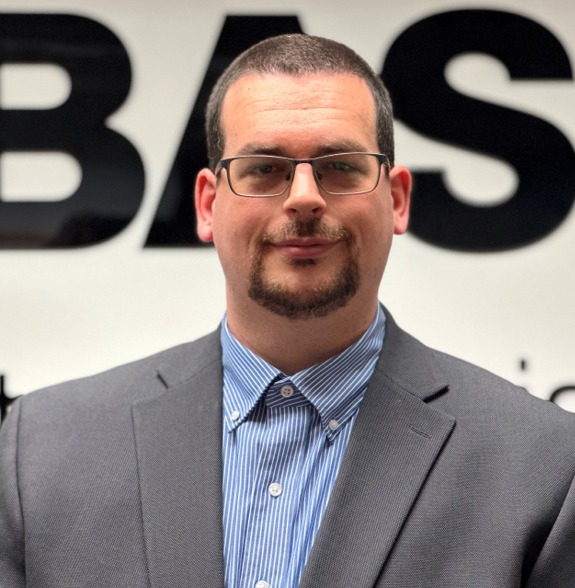
Stephen Martin
Senior Product Steward
BASF
News from the Diisocyanates Panel of the American Chemistry Council.
Speaker Biography
Stephen Martin is a Senior Product Steward with BASF Corporation representing their Chemical Monomers division including diisocyanates, inorganics, and polyamide chemistries. He has been with BASF for twelve years with various roles in R&D and technical service for polyacrylic dispersions and CASE urethane raw materials. Currently, Stephen leads the Product Risk Characterization and Strategic EHS Forecast for the monomers business and is involved in their sustainability efforts, managing existing and emerging regulations, as well as educating customers on the proper safe handling and use of their products.
Additionally, Stephen represents BASF as a member of the American Chemistry Council Diisocyanate Panel and the Environmental Advisory Group of the International Isocyanate Institute which provide advocacy and scientific research for the diisocyanates industry, respectively.
Trade Regulation and Remedies
Daniel Pickard
Buchanan, Ingersoll & Rooney
An experienced international trade attorney, Pickard will explain the basics of trade remedies, including antidumping (AD) and counterveiling duty (CVD) cases. He will then discuss recent and pending cases involving imported mattresses.
Speaker Biography
Dan has more than 20 years of experience representing clients in international trade and national security related matters. He represents clients in all aspects of international trade law, including trade remedy matters such as antidumping (AD), countervailing duty (CVD), and safeguard investigations. Specifically, Dan helps U.S. manufacturing companies who are losing market share or suffering from decreased profits to obtain relief against unfairly priced imports. He is rated among the nations’ leading international trade lawyers and is a frequent presenter and commentator on U.S. trade policy.
Dan also has extensive experience in regard to the intersection of international business and national security matters such as U.S. economic sanctions, export controls (including the International Traffic in Arms Regulations (ITAR)), antiboycott measures, and the Foreign Corrupt Practices Act (FCPA). Dan provides comprehensive international trade law compliance guidance, including to U.S. and international clients that provide goods and services that may be regulated due to national security reasons. He develops customized and specialized corporate compliance programs related to the FCPA, ITAR, the U.S. Department of the Treasury’s Office of Foreign Assets Control (OFAC) and the National Industrial Security Program (NISP) and mitigating Foreign Ownership, Control, or Influence (FOCI) issues. In cases of non-compliance and potential violations, Dan conducts internal investigations and represents clients before the relevant agencies in connection with investigations, voluntary self-disclosures, licensing, and enforcement actions. In addition, clients also often look to Dan for guidance pertaining to the Foreign Agents Registration Act (FARA).
Dan routinely appears before the U.S. International Trade Commission (ITC), OFAC, the U.S. Department of Justice (DOJ), the U.S. Department of State’s Directorate of Defense Trade Controls (DDTC), the U.S. Department of Commerce’s Bureau of Industry and Security (BIS) and International Trade Administration (ITA), the U.S. Defense Counterintelligence and Security Agency (DCSA, formerly the DSS), the Committee on Foreign Investment in the United States (CFIUS), the U.S. Court of International Trade, and the U.S. Court of Appeals for the Federal Circuit.

Carpet Cushion Report
Bob Clark
Executive Director
Carpet Cushion Council
Discussion of floorcovering industry sales trends, and regulatory challenges to the bonded carpet cushion market. Bob will report on enhanced producer responsibility (EPR) legislation being considered in several states. One such bill recently passed in NY state.
Speaker Biography
Bob Clark is Executive Director of the Carpet Cushion Council. The CCC represents the North American carpet cushion industry as an advocate and an educator. As the industry resource for answers to carpet cushion-related questions, the Carpet Cushion Council educates carpet retailers, manufacturers, distributors, and cushion manufacturers about the benefits of carpet cushion. Ultimately, the Carpet Cushion Council’s objective is to provide carpet retailers with tools necessary to improve communication with customers and increase overall sales.
Europur Update
Michel Baumgartner
General Manager
EUROPUR
An update on the Flexible PU Foam Market and Regulatory Landscape in Europe.
Speaker Biography
Michel Baumgartner is the Secretary General of EUROPUR, the European association of flexible polyurethane foam blocks manufacturers, and of EURO-MOULDERS, the European association of manufacturers of moulded polyurethane parts for the automotive industry. He serves both associations since November 2013. He spent most of his career representing trade associations in Brussels, and notably served as EU Affairs Manager of EUROBAT, the European association of automotive and industrial battery manufacturers. Michel holds a degree in political science from Sciences-Po Strasbourg, where he specialized in international relations and European law.

Bedding Industry Report
Ryan Trainer
Executive Director
International Sleep Products Association
Trends in the bedding market, and updates on state legislation affecting mattress barriers and recycling.
Speaker Biography
Ryan Trainer is President of the International Sleep Products Association (ISPA) which seeks to enhance the growth, profitability and stature of the mattress industry. Prior to joining ISPA, Trainer was a partner in the Washington, D.C. office of Clifford Chance, a global law firm where he specialized in product liability, international regulatory, trade policy, consumer privacy and commercial matters.
Michael Gallagher is a research consultant for The Mattress Recycling Council, a non-profit organization dedicated to the development and implementation of statewide mattress recycling programs for states that have enacted laws. The organization provides valuable information and resources for industry professionals. Prior to working with the Council, he was Head of Innovation and Business Growth Services For Covestro.
Canadian Chemical Industry Update
Danielle Morrison
Policy Manager, Chemical Health and Data Management
Chemistry Industry Association of Canada
A report on revisions to the Canada Chemical Action Plan, comparable to the U.S. Toxic Substances Control Act (TSCA).
Speaker Biography
Danielle Morrison is Policy Manager, Chemical Health and Data Management for the Chemical Industry Association of Canada. She leads advocacy on federal and international chemicals management by developing/maintaining relationships with federal officials and promoting science-based solutions to ensure chemicals in commerce remain safe and sustainable.
She currently is focused on leading coalitions of 75+ industry representatives on two key chemicals management issues: the legislative review of Canada's cornerstone environmental Act (CEPA)--the first update to the Act in over 20 years-- and actions to address the broad class of PFAS. She serves as Vice-Chair to the Risk Management Committee of the Industry Coordinating Group for CEPA, spearheading a project to create a single database for Canadian chemicals management-related information.
Morrison received her bachelor's and masters degree from Queens University.

Technical Committee Update
Bobby Bush, Jr.
Technical Committee Chair
Past President, PFA
A report on PFA Technical Committee work and associated industry issues.
Speaker Biography
Bobby Bush Jr. serves as Technical Committee Chair for PFA and Technical Director for the Upholstered Furniture Action Council (UFAC). Though he remains active in many foam industry activities (ASTM, NFPA, UFAC, AFPF (CertiPUR-US)), he recently retired – after 45 years – from Hickory Springs Manufacturing Company. During the years his roles evolved from Sales Trainee to Senior Vice President of Foam Technology. Bush wass responsible for the development and advancement of new foam products and technologies and for overseeing environmental and regulatory compliance at all company facilities.
Bush has been instrumental in developing some of the most important initiatives in the flexible polyurethane foam industry. He is a graduate of Duke University, with a degree in Business Administration and Management. He is a many-times past President of PFA.
Sustainability Committee Report
Andrew Kee
Committee Chair
Wanhua Chemical
A report on the initial work of PFA's Sustainability Committee.
Thursday, November 2 Schedule
General Business Session
Thursday, November 2
9:30am-Noon

Welcome
Chip Holton (PFA President)
President, NCFI Polyurethanes
Speaker Biography
Chip Holton has been President of NCFI Polyurethanes since 2015. He holds an engineering degree from The United States Military Academy at West Point and is a former serving US Army infantry officer. His work career began with Alcatel (now Alcatel-Lucent) fiber optics division where he served in multiple capacities from line supervisor to plant manager in Claremont, NC. Holton joined GE Plastics in 2003, where he served as Southeast Region Operations Manager, overseeing logistics, distribution, and manufacturing for up to 13 facilities. He also served as Vice President of US Operations for Swiss company, Jacob Holm Industries, one of the world’s leading nonwoven roll good manufacturers, before joining NCFI Polyurethanes as Operations Manager.

Membership & Treasurer's Report
Russ Batson
PFA Executive Director
Speaker Biography
Russ Batson is Executive Director of the Polyurethane Foam Association. He has more than two decades of related experience providing public affairs and regulatory counsel, working with corporations and industry associations, to advocate issues based on credible science and sound economics. Prior to joining PFA, he served as Senior Counsel, Government Relations, Americas, for SABIC, advising one of the world’s largest chemical and plastics producers on key regulatory matters and opportunities. Before this position, he worked for 15 years with the American Home Furnishings Alliance (formerly American Furniture Manufacturers Association) as Director of Congressional and Regulatory Affairs and as Vice President of Government Affairs. At AHFA, he was instrumental in helping shape rulemaking on upholstered furniture flammability, involving complex issues of fire science, chemical safety, product liability and federal preemption. The positive effects of his work in this area are still seen in the industry today. Batson holds bachelor’s and law degrees from the University of Virginia. He is admitted to the bar in Virginia.

Legal Counsel Report
Jim McIntyre
McIntyre & Lemon
Speaker Biography
Mr. McIntyre, a native of Vidalia, Georgia, received an A.A. degree from Young Harris College in 1959, a B.A. from the University of Georgia in 1963, and a J.D. from the University of Georgia School of Law in 1963. He is a former Director of the U.S. Office of Management and Budget. He represents clients in general corporate matters and trade association law and on legislative and regulatory issues in banking, insurance, finance, tax, and environmental areas. He is a member of the District of Columbia Bar and the State Bar of Georgia. He is admitted to practice before the U.S. Supreme Court and the U.S. Court of Military Appeals.

Communications Report
Wayne Bowman
PFA Communications Counsel
Speaker Biography
Wayne Bowman is Communications Counsel for PFA. In his 38-year career with advertising and public relations agencies, he has worked for more than 250 companies, including ARCO Chemical, Union Carbide, Mohawk Industries, Recticel Foam, the Flexible Foam Market Council, the Carpet Cushion Council, the Particleboard/Medium Density Fiberboard Institute, Kingsdown Mattresses, and Pennsylvania House Furniture. He first began with PFA in 1986, when he worked with Bob Luedeka at the J.P. Hogan & Company Advertising Agency. He left the agency and PFA in 1991, then returned to PFA in 2015. His business, Bowman Creative + Strategy, works with a variety of clients and agencies throughout the Southeast. During his career, he has won more than 80 ADDY, Public Relations Society of America, and Society For Technical Communications Awards (including some for PFA). He is a member of the American Advertising Federation-Knoxville Hall of Fame, and a recipient of the American Advertising Federation National Silver Medal.

Special Presention:
Flexible Polyurethane Foam Hall Of Fame Induction
Honoring Two Influential Industry Veterans

Bill Gollnitz
Plastomer Corp.
Speaker Biography
Bill Gollnitz has more than 40 years’ experience in the flexible polyurethane foam industry. For more than 20 years, he has been Technical Director at Plastomer Corporation. Prior to that, he held group management positions at ARCO Chemical Company and Olin Chemical. He began his career in the foam industry with Firestone Foam. He has a deep understanding of how chemistry, manufacturing and suppliers can work together to advance the polyurethanes industry. He is a Past President of PFA, and currently serves on PFA’s Executive and Technical Committee. Gollnitz holds a B.A. in chemistry from Lipscomb University and an MBA from Bryant University.
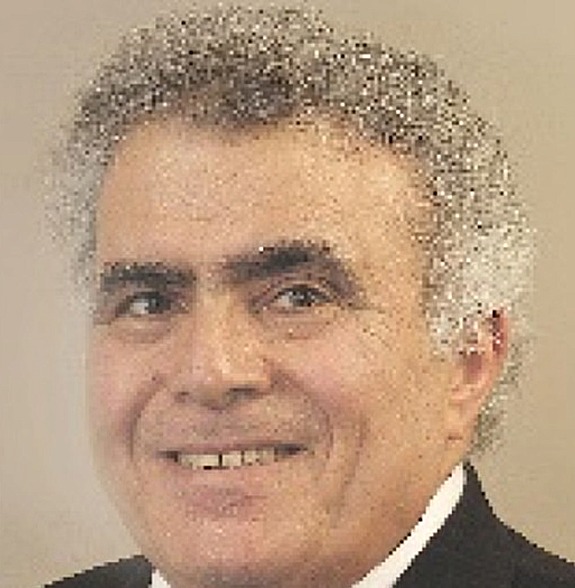
Dr. Hamdy Khalil
The Woodbridge Group
Speaker Biography
Dr. Hamdy Khalil is the Senior Global Director for Advanced Technologies Research and Product Development and Innovation for the Woodbridge Foam Corporation, a major manufacturer of flexible molded polyurethane foam for the global automotive industry. Dr. Khalil pioneered the introduction and commercialization of renewable materials into the polyurethane chemistry used in interior automotive parts manufacturing. Under his guidance, Woodbridge became one of the early adopters of green technologies using biobased polyols. Khalil also played a leading role in ongoing efforts to harmonize OEM specifications for VOC emissions from plastics in auto interiors.
Dr. Khalil served on the Board of Directors of Ontario Bio Auto Council, and the Center for Research and Innovation in the Bio Economy ( CRiBE). He acted as an advisor to the National Research Council of Canada on renewable and sustainable materials technology. Dr. Khalil received the Outstanding Leadership From the Center For the Polyurethane Industry (CPI), and the Technical Leadership Award from The Nano Division of the Technical Association for the Pulp and Paper Industry (TAPPI). He was selected to the Advisory Panel For Arbora Nano for the Advancement of Lignocellulosic Products. Dr. Khalil received the “Le Sueur Memorial Award” from the Society of Chemical Industry for Outstanding Industrial Contribution.
His passion is to mentor the new generation of scientists and engineers.
Prior to Woodbridge, Dr. Khalil held positions at Labatt's in the pharmaceutical Division, for PolySar Corporation as analytical laboratory supervisor and as Senior Technical Manager for BFGoodrich.
He holds a BSc with majors in chemistry and physics from the University of Alexandria in Egypt, an MSc in Nutritional Biochemistry from Cairo University in Egypt and a PhD from Windsor University. He has long served on PFA’s Executive Committee and taken on other roles in the association.
Technical Session
Thursday, November 2
2-5pm
Session Moderator
Bill Gollnitz
Plastomer Corp.
(Immediate Past President, PFA)
Speaker Biography
Bill Gollnitz has more than 40 years’ experience in the flexible polyurethane foam industry. For more than 20 years, he has been Technical Director at Plastomer Corporation. Prior to that, he held group management positions at ARCO Chemical Company and Olin Chemical. He began his career in the foam industry with Firestone Foam. He has a deep understanding of how chemistry, manufacturing and suppliers can work together to advance the polyurethanes industry. He is a Past President of PFA, and currently serves on PFA’s Executive and Technical Committee. Gollnitz holds a B.A. in chemistry from Lipscomb University and an MBA from Bryant University.
Technical Committee Chair
Bobby Bush, Jr.
(Past President, PFA)
Speaker Biography
Bobby Bush Jr. serves as Technical Committee Chair for PFA and Technical Director for the Upholstered Furniture Action Council (UFAC). Though he remains active in many foam industry activities (ASTM, NFPA, UFAC, AFPF (CertiPUR-US)), he recently retired – after 45 years – from Hickory Springs Manufacturing Company. During the years his roles evolved from Sales Trainee to Senior Vice President of Foam Technology. Bush wass responsible for the development and advancement of new foam products and technologies and for overseeing environmental and regulatory compliance at all company facilities.
Bush has been instrumental in developing some of the most important initiatives in the flexible polyurethane foam industry. He is a graduate of Duke University, with a degree in Business Administration and Management. He is a many-times past President of PFA.
Technical Presentations
Improving the Sustainability of Polyurethanes in Automobiles. Damir Andrasek, EUROPUR.
Polyurethane is the second most used plastic (by weight) in motor vehicles, and current projections point toward even wider use in automotive applications in the future. While polyurethane as a material is recyclable, one of the challenges associated with PU parts from vehicles is the fact that they are difficult to reuse or recycle with current design and waste treatment technologies. European regulators have taken note of the relatively low rate of recycling of plastics in the automotive industry. In July, the European Commission published on its proposal for the revision of the End-of-Life Vehicles Directive. The proposed legislation contemplates a vast transition of the automotive sector to a circular economy, considering all life-stages of vehicles, from design, production, distribution to EOL strategies.
In a 2023 report, EURO-MOULDERS acknowledges such regulatory developments and assesses strategies to improve the sustainability of polyurethane in the auto sector. Based on primary and secondary research, three main opportunities have been identified. These are: (1) enhancing recycling of the material; (2) substituting some of the fossil-fuel-based precursors to polyurethane; and (3) incorporating environmental considerations in vehicle design. Scaling these solutions will require a whole-of-value-chain approach and contribution from all the stakeholders along the polyurethane value chain.
Sustainable PU Flexible Foams: Utilizing Renewable Materials from Biomass and Soy. Enoch Aquah, Kevin Dunne, Bher Anibal, Wanwarang Limsukon, Rafael Auras, and Mojgan Nejad, Michigan State University.
This talk is focused on increasing the biobased carbon content of PU foams using a mixture of soy and lignin polyols without compromising performance. Lignin accounts for one-third of the dry mass of plants and is widely available through pulping and biorefinery processes. The flexible foam samples were prepared by replacing 10-50% fossil fuel-based polyols with different amounts of soy and lignin polyols. The developed biobased foams were analyzed by measuring their densities, tensile strengths, ultimate elongations, tear strengths, compression force deflections, support factors, biobased carbon content, and biodegradability. Our results showed the foams made by replacing up to 40% commercial polyol met all the requirements for automotive seating applications, and the biobased portion of foams was degraded in thermophilic composting conditions (58°C) in less than three months.
Optimizing Slabstock Production And Quality, And Minimizing Waste Through A Modeling, Simulaton, Measurement, Reporting, And Tracking Platform. Angel Vinas, General Manager and Co-Owner, IPF, Bizkaia, Spain.
Inefficiencies in the production, handling, transformation and management of end-of-life (EOL) of polyurethane foam can result in added costs and compromised sustainability.
The Foamledge platform provides foam producers with tools to optimize efficiency throughout the process stretching from tank rooms, to foaming, block cutting, handling, transformation into products, and EOL fate. These features can be mixed and matched according to customer needs, or integrated into a comprehensive platform.
- Manage your tank room, plan your foaming and forecast your use of raw materials. Link your foam results with the raw materials used.
- Model and optimize your foaming process. Create and test formulas in a virtual environment.
- Digitize your foam lab and connect it with your manufacturing process, to better understand and improve results.
- Monitor the internal temperature of your foam blocks during curing. Includes alarm management and process analysis.
- Measurement and weighing of foam blocks. Combines the most accurate block scanner (accuracy = 1 mm) and dynamic block weighing.
- Create “foam passports,” which allow barcode tracking of foam throughout its lifecycle.
Speaker Bio: Angel Vinas has served as General Manager of IPF since 2007. IPF has supplied handling and data management solutions for the FPF industry worldwide for more than 30 years. Angel holds a degree in mechanical engineering from the University of the Basque Country, Spain, and an MBA from the ESEUNE Business School. Before joining IPF, he worked in R&D for an engineering company serving the automotive industry.
Chemical Upcycling of Commodity Thermoset Polyurethane Foams Toward High-Performance 3D Photo-Printing Resins. Tao Xie, State Key Laboratory of Chemical Engineering, College of Chemical and Biological Engineering, Zhejiang University, Hangzhou, China
Polyurethane thermosets are indispensable to modern life, but their widespread use has created end of life (EOL) environmental challenges. Here we report a highly efficient chemical strategy for upcycling thermoset polyurethane foams that yields products of higher economic values than the original material. Starting from a commodity foam, we show that the polyurethane network is chemically fragmented into a dissolvable mixture under mild conditions. We demonstrate that three-dimensional photo-printable resins with tunable material mechanical properties—which are superior to commercial high-performance counterparts—can be formulated with the addition of various network reforming additives. Our direct upcycling of commodity foams is economically attractive and can be implemented with ease, and the principle can be expanded to other commodity thermosets.
Pathways to Circular Economy – A Co-created Vision By And For The Polyurethane Foam Industry. Mona Abadian (Ph.D Student at Virginia Tech) and Jennifer D. Russell, Ph.D. (Asst. Professor at Virginia Tech). Presenter: Jennifer D. Russell
Diverse industries worldwide have begun to explore business models and value chain innovation opportunities tied to a circular economy (CE). However, CE engagement often requires the coordination of material and product flows across the value chain, which presents a significant challenge for individual companies to overcome independently. The polyurethane foam (PU foam) industry is no different: changing international regulations and consumer expectations are motivating PU foam value chain members to evaluate their strategic options.
This presentation provides an update on a research project led by Dr. Russell and by Dr. Tim Long of Arizona State University, and involving a diverse group of stakeholders, including foam manufacturers, chemical suppliers, recyclers, academics and government. The project received funding from the National Science Foundation.
To facilitate an organized and collaborative approach, this study utilized a workshop and semi-structured interviews focused on the potential for CE initiatives and priorities for the PU foam industry. Participant interactions and activities were structured according to the ABCD “backcasting” methodology:
- Awareness and Defining Success (A);
- Baselining the Current State (B);
- Creative Solutions (C); and,
- Decide on Priorities (D).
First, (Steps A and B), individual participants attended a brief informational presentation on CE, and then used a digital collaboration tool to document personal responses to a series of questions regarding stakeholders, opportunities, and barriers related to CE for the PU foam value chain. In preassigned diverse groups, participants collaboratively developed visions and requirements of the future CE for each value chain stage, and related policy and research needs. Finally, (Step D), individuals and groups identified, ranked, and classified their preferred priorities into short- (up to 5-years), mid- (5 – 10 years), and long-term (>10 years) timelines.
Baseline activities surfaced common themes, most critically the interconnectedness, collaboration, and communication that CE requires of material value-chains. Participants were agreed on current-state constructive conditions, including consumer acceptance of recycled-content, proof-of-concept models (e.g., mechanical mattress recycling), and the feasibility of substituting biomaterials in place of primary feedstocks. Visioning activities revealed that CE transformation priorities (ranked as Top 3 by individuals and groups) were equally allocated across diverse value chain stakeholder groups. The majority of resulting co-created CE transition priorities were classified as short-term (within the next 5 years), including:
- increased coordination between manufacturers, suppliers, and recyclers, to establish and communicate clear circular material specifications and requirements;
- alternative applications for recycled-content feedstocks;
- the use of product labelling requirements regarding end-of-life instructions (for consumers) and disassembly and recycling information (for recyclers); and,
- collaborative research to understand the implications of chemical recycling for material properties, and the isolation and recovery of chemical recycling by-products.
In the mid-term, the majority prioritized educating consumers about local circular economy options and offering incentives to encourage participation. The investment in, and development of markets for by-products of chemical recycling (e.g., urea, primary amines, isocyanates) was identified as a mid- to long-term priority. Co-created priorities, timelines, and coordination requirements are presented in the form of a strategic roadmap for the PU foam industry’s transition to CE.
Speaker Bio: Dr. Russell works in the area of circular economy and sustainability, the flows of materials within economic consumption-production systems, and strategies for slowing and closing material loops. As co-author of the UNEP International Resource Panel publication “Re-defining Value – The Manufacturing Revolution”, her background includes an emphasis on strategy for market transformation. Dr. Russell received her PhD degree from the Golisano Institute for Sustainability at the Rochester Institute of Technology. Prior to joining the department, the position she held was a lecturer in Sustainable Operations and Supply Chain, and Circular Value Chain, in the MBA in Sustainability program at Bard College. Prior to pursuing academia, Dr. Russell worked as an industry sustainability consultant for 10 years, for multi-national CPG clients based across North America and Europe.
Dr. Russell’s research program is centered around the integration of, and opportunities for circular systems and practice for sustainable biomaterials. This work spans sustainable materials, applications in packaging and the built-environment, and circular practice including remanufacturing, refurbishment, repair, reuse, and recycling.
Pump And Control Innovations To Optimize PU Foam Machines. Raphael Bretz, Hennecke Inc.
The basic principles of flexible polyurethane foam production have changed little over the past decades. However, the wide variety of applications for foam demand high standards of quality and specific performance characteristics. There are substantial differences in the product required by the “comfort” segment for mattresses and furniture, on one hand, and the “technical foam” sourced for applications in the automotive industry. Sustainability goals like energy efficiency, raw material savings and more sustainable chemical precursors have also come into focus in recent years. Innovations in pump technology and control systems are two areas where suppliers to foam manufacturers are responding to these needs.
In the last two years, Hennecke’s application experts have developed a new generation of pumps to be manufactured at the company’s site in Sankt Augustin, Germany. Hennecke’s HX series pump line is to be produced exclusively for polyurethane applications. Here, the focal point is on a precise, highly efficient, and future-fit metering line.
Hennecke’s FOAMWARE control system replaces the previous process data recording systems, NFLEX and PDE. Features include the high-performance hardware, diverse functions, intuitive user navigation, and a multitude of standard tools as well as useful plug-ins and additional options. The software offers a clear display of all relevant production data offering extensive calibration modules, and tank level monitoring. A noteworthy highlight is the ‘magic eye’ function, which recognizes and immediately presents metering deviations and irregularities during operation. Operators also benefit from a database module that stores information about the mixtures and chemicals and provides active support to adjust and create new formulations. A third-party interface is used to import and export the data and to connect to the customer’s own network or goods management system, or to communicate with SAP.
Industry Cocktail Reception
Thursday, November 2, 6:00pm
Celebrate a successful PFA meeting with good food and drink, networking, and an opportunity to catch up with industry colleagues.
During the reception, we'll also announce the Herman Stone Technical Excellence Award, voted on during the Technical Program.
Reception sponsored by Siltech Corporation.